
Self-storage is a service that provides secure, rented spaces where individuals or businesses can store personal belongings, furniture, seasonal items, inventory, vehicles, or equipment for short-term or long-term use. These storage units are typically private, self-contained, and accessible only by the renter, offering flexibility, security, and convenience beyond what home or office space can provide.
Understanding the full benefits of self-storage requires examining the types of units available, their key features, and common ways they are used. Available types include storage warehouses, storage containers, lock-up units, and furniture depositories, each designed for specific requirements. Features such as flexible rentals, robust security, varied unit sizes, accessibility, and cost effectiveness ensure convenience, protection, and affordability. Self-storage is commonly used for moving and relocation, decluttering, seasonal storage, business inventory, and storing vehicles or equipment, highlighting its versatility for both personal and business purposes.
What Are the Types of Self Storage?
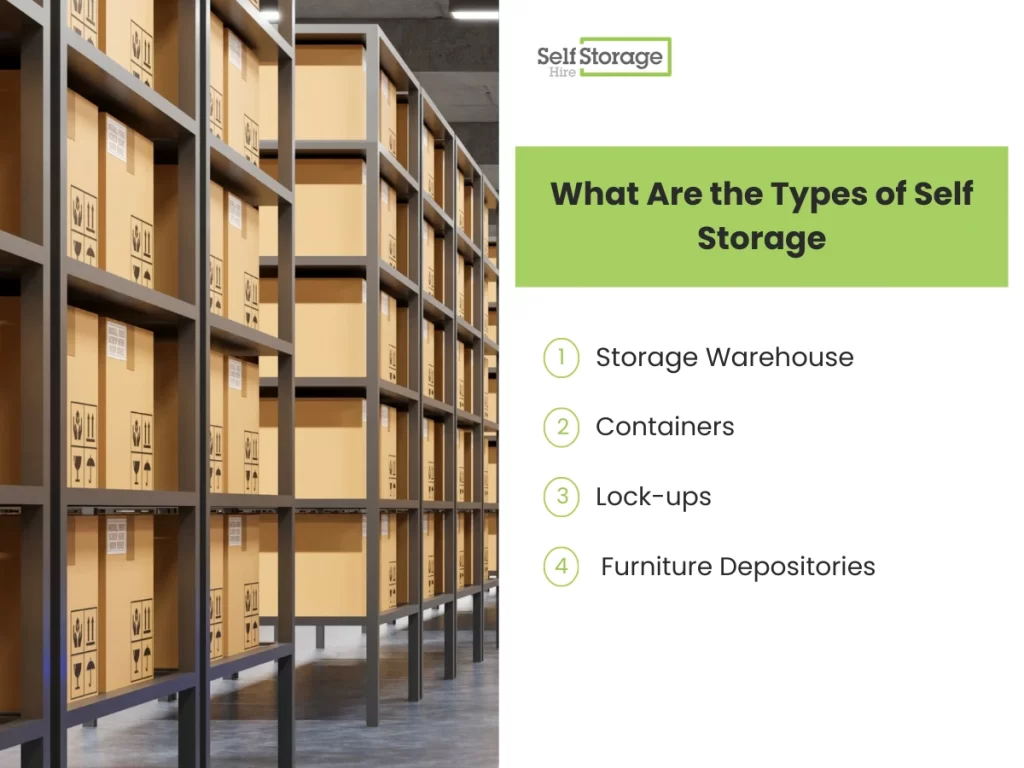
The various types of self-storage include storage warehouses, containers, lock-ups, and furniture depositories, each designed to meet different storage needs based on item size, storage duration, and required level of access. While some self storage options focus on maximum security and indoor protection, others prioritise convenience, accessibility, or specialised care for certain items. This variety allows individuals and businesses to choose a secure and flexible storage solution that best matches their space requirements, budget, and usage preferences.
4 common types of self storage include:
Storage Warehouse
A storage warehouse is a large, professionally managed self-storage facility that contains multiple storage units in a single secure commercial building, with average unit sizes ranging from 15 to 340 square feet. With features such as controlled access, surveillance systems, and optional climate control, storage warehouses offer a safe, flexible way to store belongings without sacrificing accessibility. These warehouses are designed to accommodate a wide range of storage needs, from small personal items to large household contents or commercial inventory. They are particularly suitable for individuals and businesses that require a reliable, long-term storage solution with enhanced security and protection from environmental factors.
Containers
Designed as self-contained units, storage containers are compact and typically range from 52 to 300 square feet, making them ideal for storing medium to bulky items. This type of self-storage is especially suitable for people who need quick and convenient access to their items, such as during home renovations, construction projects, or short-term relocations. Storage containers are weather-resistant and allow drive-up access, making loading and unloading easy. They are a practical solution for bulky items, tools, or equipment where climate control is not a primary concern.
Lock-ups
Offering privacy and secure access, lock-ups are enclosed self-storage units ranging from 125 to 320 square feet, ideal for storing personal belongings, tools, or small-business inventory, with full control and security. Each unit is secured with the renter’s own lock, ensuring only the renter has access to the stored items. Lock-ups are well-suited for personal belongings, tools, small-business inventory, and vehicle storage, particularly in urban areas where space is limited. Their private, self-service nature makes them ideal for users who want a simple, secure storage option without shared access or third-party handling. Lock-up units are designed with security in mind, providing private storage spaces supported by features such as CCTV and controlled access to keep belongings well protected.
Furniture Depositories
Furniture depositories are specialised self-storage facilities designed to protect and preserve furniture and delicate household items, with average sizes ranging from 25 to 300 square feet. These spaces are often climate-controlled to manage temperature and humidity, reducing the risk of damage such as warping, cracking, or mould. They are most suitable for long-term storage needs, such as during extended travel, home renovations, or property staging. By offering careful handling and optimal storage conditions, they help maintain the quality and lifespan of valuable or sentimental furniture.
What are the Key Features of Self Storage?
The key features of self-storage include flexible rentals, robust security, a variety of unit sizes, accessibility, and cost effectiveness, all of which play an essential role in delivering a positive and reliable self-storage experience. While flexibility and accessibility improve convenience, security ensures protection, and varied unit sizes help control costs, making self-storage a practical and affordable option for different needs.
5 key features of self-storage are:
- Flexible Rentals
A positive self-storage experience often depends on flexible rentals, which allow customers to choose storage durations that match their needs. Whether storing items for a short transition period or a longer term, this rental flexibility improves convenience by removing long-term commitments, enhances affordability by preventing unnecessary costs, and ensures users remain in control as their storage requirements change.
- Robust Security
Every self-storage customer benefits from robust security features, including 24/7 CCTV surveillance, controlled access, and secure locking systems. These measures protect belongings from theft or damage while enhancing overall safety, providing trust and peace of mind when storing valuable or personal items.
- Variety of Sizes
Efficiency and cost control are supported by offering a variety of unit sizes, allowing users to select a space that accurately fits their belongings. Choosing the right self storage unit size improves convenience by keeping items organised, enhances affordability by avoiding payment for unused space, and ensures storage remains practical for both small and large needs.
- Accessibility
Accessibility enhances the overall self-storage experience by allowing users to access their belongings easily and at exactly the right time. Features such as convenient access hours, drive-up units, and well-designed loading areas reduce physical effort and save time, making storage simple to use. This ease of access is especially valuable for users who need frequent entry or occasional retrieval, ensuring the service remains practical, efficient, and user-friendly.
- Cost Effective
Maximising value is a key advantage of self-storage, as it allows users to secure flexible storage without incurring unnecessary expenses. By paying only for the space, duration, and features they need, customers can better manage costs while still benefiting from reliable security and convenient access. This makes self-storage an affordable and practical alternative to expanding living or business space, without compromising on safety or usability.
How Does Self Storage Work?
Self-Storage works by letting users choose a storage unit size, rent the space, move items into the unit, secure the unit, access belongings as needed, and pay rent, providing a simple, flexible, and secure storage solution. Understanding how self storage works helps ensure a hassle-free experience while keeping items safe and accessible.
- Choose a storage unit size
Choosing a storage unit size starts by assessing the number and type of items to be stored, such as furniture, boxes, or business inventory. Storage facilities typically offer size guides or staff assistance to help match belongings to an appropriate unit. Selecting the correct size is important because it ensures items fit comfortably without overcrowding, allows safe movement within the unit, and prevents paying for unused space, making the self-storage process smoother, more secure, and cost-effective.
- Rent the space
Once the appropriate self storage unit is selected, the space can be rented on a short- or long-term basis by completing a simple rental agreement, either online or at the storage facility. This process involves providing basic details, confirming the rental duration, and setting up payment, after which access to the unit is granted. Renting the space formally reserves the unit, activates security and access controls, and ensures the user can store items without interruption, making it a key step in a smooth and secure self-storage experience.
- Move items into the unit
Moving items into the unit works by transporting belongings to the storage facility and placing them directly into the rented space. Most facilities provide features such as drive-up access, loading bays, lifts, and trolleys to make this process easier and safer. Carefully arranging items inside the unit helps prevent damage, keeps walkways clear, and makes access easier later, ensuring a smooth and organised self-storage experience.
- Secure the unit
After items are placed in the storage space, the unit is secured by locking it, usually with a personal padlock chosen by the renter. This action ensures that only the authorised user can access the unit. In addition to the individual lock, storage facilities support this step with security measures such as 24/7 CCTV surveillance, gated entry, and controlled access systems. Properly securing the unit is important because it prevents unauthorised entry, protects belongings from theft or damage, and provides peace of mind, making it a critical part of a safe and reliable self-storage experience.
- Access belongings
When users need to retrieve or add items, access is granted through authorised entry systems, such as keypads, access cards, or personal codes, during designated access hours. This process allows users to unlock their unit and manage stored items while maintaining security within the facility. Controlled access is important because it ensures only approved individuals can enter, protecting stored belongings while still offering the flexibility needed for a smooth and secure self-storage experience.
- Pay rent
To maintain access to the storage unit, rent is paid at agreed intervals, most commonly on a monthly basis, through online systems, automatic payments, or at the facility. This process confirms the ongoing rental agreement and keeps security and access permissions active. Making timely payments is important because it prevents service interruptions, ensures the continued protection of stored belongings, and supports a smooth and secure self-storage experience.
What are Common Uses of Self Storage?
Common uses of self-storage include moving and relocation, decluttering homes and apartments, storing seasonal items, storing business inventory, and storing vehicles and equipment. While each use serves a different purpose, they are primarily differentiated by factors such as storage duration, access frequency, item type, and required space. Together, these uses show how self-storage adapts to varied personal and business needs by offering flexible, secure, and practical storage solutions.
5 common uses of self storage are:
- Moving and Relocation storage
Moving and relocation storage is one of the most common reasons people rent a self-storage unit, often acting as a practical halfway house for belongings during a move. When moving dates or property closing dates do not align, self-storage provides a secure and temporary place to store furniture, appliances, and packed boxes. This solution is effective because it removes time pressure during the moving process, keeps belongings safe while transitions are completed, and allows movers to organise their relocation at their own pace without overcrowding their new or temporary living space.
- Decluttering homes and apartments
As residential spaces continue to shrink, self-storage provides a practical way to free up living areas without parting with sentimental or occasionally used items. Effective decluttering can be achieved using strategies such as the Four-Box Method, Start Small to Avoid Burnout, and the One-Year Rule. The Four-Box Method sorts items into Keep, Donate, Discard, and Store, while starting small prevents overwhelm by focusing on one area at a time. The One-Year Rule helps identify items not used in the past year. Together, these strategies make decluttering manageable and allow self-storage to keep seasonal or sentimental items without cluttering living spaces.
- Storing seasonal items
Seasonal belongings, such as holiday decorations, winter clothing, or outdoor equipment, can take up valuable space when not in use. Self-storage provides a secure, convenient place to store these items, making it easier to rotate belongings as the seasons change while keeping living areas clutter-free. Important strategies include cleaning items before storage, using vacuum-sealed bags, labelling boxes clearly, and placing frequently used items near the front for easy access.
- Business inventory storage
Self-storage for business inventory offers a flexible, cost-effective alternative to traditional warehousing, with short-term, scalable, secure units. Ideal for e-commerce, startups, and growing businesses, facilities offer 24/7 access, climate-controlled spaces, and on-site staff for deliveries. They help declutter offices, manage seasonal stock using methods like First-In-First-Out, and avoid long-term commercial leases, allowing businesses to scale storage needs, secure inventory, and control operational costs efficiently.
- Vehicle and equipment storage
Secure, long-term solutions for vehicles and equipment include locked garages, specialised facilities with CCTV and humidity control, and on-site containers for machinery. Proper preparation involves cleaning, covering, checking fluids, and maintaining batteries, while vehicle-specific tools and gear can be organised in durable, stackable, and lockable storage boxes. Self-storage facilities accommodate vehicles, tools, and large equipment that may not fit at home or work, effectively protecting valuable assets from weather and theft while keeping them accessible when needed.
How Much Does Self Storage Cost?
The cost of self-storage typically ranges from £10 to £50 per week or £40 to £200 per month, depending on factors such as storage unit size, location, security features, and rental duration. Smaller units are usually at the lower end of the price range, while larger or climate-controlled units cost more because they provide extra protection for sensitive belongings. Facilities with advanced security, including controlled access systems, surveillance cameras, and unit-level alarms, may also charge higher rates because of the added level of safety.
Regional differences in self storage costs further affect pricing, reflecting local demand and property values. In London, costs typically range from £20-£60 per week or £80-£210 per month, while in Manchester they average £20-£30 per week or £85-£170 per month. More budget-friendly options are available in Doncaster at £10-£25 per week or £40-£100 per month, Bristol at £10-£40 per week or £40-£160 per month, and Edinburgh at £12-£35 per week or £50-£140 per month, demonstrating how location significantly influences self storage costs.
How to Choose the Right Self Storage?
Choosing the right self-storage unit requires carefully assessing storage needs, evaluating security measures, considering location and accessibility, determining climate control, checking condition and maintenance, understanding terms and cost, and reviewing facility feedback to ensure the unit meets your specific requirements.
Steps to choose the right self storage are:
- Assess Storage Needs: Take an inventory of your belongings and categorise them by size (small, medium, large) to estimate the space required, while also accounting for any future additions.
- Evaluate Security Measures: Focus on facilities that offer 24-hour CCTV, strong, well-maintained gates and electronic access systems, and good lighting to keep your items safe.
- Location and Accessibility: Select a facility near your home or business for convenience, especially if you need frequent access. Check for amenities such as lifts, trolleys, and packing materials, as well as access hours.
- Determine Climate Control: Choose a climate-controlled unit for items sensitive to temperature or humidity, such as antiques, electronics, or important documents.
- Check Condition and Maintenance: Visit the facility to confirm that units are clean, dry, well-maintained, properly ventilated, and in good condition.
- Understand Terms and Cost: Compare prices while accounting for any hidden fees, such as insurance or security deposits, and ensure the contract offers flexibility for short- or long-term storage.
- Check Reviews: Research the facility’s reputation online to verify reliability, service quality, and customer satisfaction.