
To store furniture in a storage unit, clean and disassemble items, wrap them with breathable protective materials, and arrange them to prevent pressure, moisture, and pest damage. Begin by thoroughly cleaning and drying furniture, then disassemble large pieces and wrap components with moving blankets or fabric covers to prevent mold, scratches, and structural stress. Avoid direct plastic contact, apply basic pest prevention, and stack items vertically with spacing to improve airflow and reduce pressure on surfaces. Selecting a climate-controlled unit and a facility with strong security standards helps maintain the long-term condition and value of your furniture.
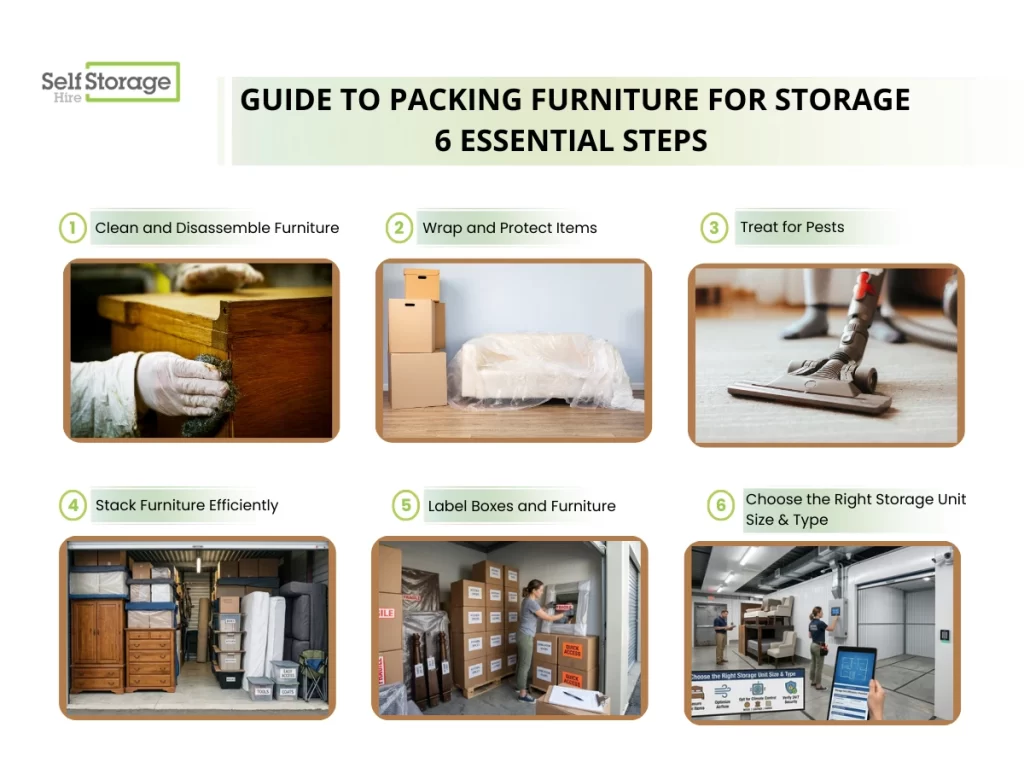
Step 1: Clean and Disassemble Furniture
Cleaning of the furniture removes organic residues that cause mold and permanent staining in storage environments. Maintain surface integrity, following these instructions:
- Wipe wooden items, such as a chest of drawers or a dining table, with pH-neutral wood cleaner.
- Vacuum upholstered furniture, including sofas and armchairs, to remove skin cells and dust mites.
- Polish metal frames with a microfiber cloth to remove moisture that can cause oxidation.
- Dry every item completely in a ventilated area for 24 hours before transport.
Disassembling furniture reduces the footprint of large items and prevents joint stress. For structural integrity during moving and stacking, follow the given instructions:
- Remove table legs and bed slats to save vertical space.
- Detach headboards, footboards, and side rails to prevent wood warping.
- Separate modular couch sections into individual units.
- Extract removable shelves from cabinets and bookcases to reduce weight.
Step 2: Wrap and Protect Items
After cleaning and disassembling furniture, the next step is to apply proper furniture protection. Using the right packing materials creates a protective barrier that prevents friction during stacking. Each furniture type requires specific materials to prevent surface damage:
- Wrap fragile items: Use double-layer bubble wrap with cardboard on both sides for glass and delicate surfaces. Store items vertically to reduce pressure and the risk of breakage.
- Protect wooden furniture: Cover the furniture with heavy-duty blankets, then secure them with stretch wrap over the fabric. This prevents scratches while avoiding direct contact with plastic.
- Reinforce flat surfaces: Place cardboard sheets over tabletops, dressers, and drawers to prevent dents and punctures during stacking.
- Use corner protectors: Attach corner guards to tables and cabinets to reduce chipping and impact damage during moving.
- Prevent moisture buildup: Avoid placing plastic directly on wood or upholstery, as it can trap condensation and cause mould or damage to the material. Use a breathable layer to help keep items dry during storage.
Step 3: Treat for Pests
After wrapping and protecting furniture, the next step is to treat items for pests. Pest prevention protects furniture in a storage unit from infestation during temporary and long term Storage. Each furniture type requires preventive inspection and treatment before entering Storage Units:
- Inspect all furniture surfaces, focusing on hidden areas such as drawers, interiors, fabric seams, and joints to detect signs of pests. Early detection prevents infestation from spreading inside the storage facility.
- Deep vacuum all upholstered items to remove dust, larvae, and other organic particles that serve as a primary food source for insects during the rental period.
- Wipe down wooden surfaces with a mild disinfectant solution to remove organic residues that attract pests, ensuring every piece of furniture is dry before placing it in storage.
- Seal all small gaps, tighten loose joints, and ensure all modular compartments are securely closed to limit internal exposure.
- Avoid storing food, scented items, or organic materials, as they attract pests and increase the risk of contamination in the storage space.
- Use breathable protective covers that allow airflow while creating a physical barrier against pest access to surfaces.
- Avoid using airtight plastic wrap directly on furniture, as trapped moisture can create a damp environment that encourages pest activity and internal rot.
Step 4: Stack Furniture Efficiently
The next step is to stack furniture correctly inside storage units. Proper arrangement supports safe access during both temporary and long-term storage. Each storage layout should follow structured placement rules to prevent structural stress:
- Place heavy furniture at the base to create a stable foundation, ensuring that items like wardrobes and solid-wood tables sit flat on the floor to prevent shifting.
- Stand mattresses and sofas upright to maximise floor space and improve air circulation, using breathable covers to keep fabric dry and clean.
- Stack lighter goods on top of heavier items only after ensuring contact points are separated by bubble wraps, blankets, or cardboard to prevent surface friction.
- Create vertical layers instead of horizontal piles to distribute weight evenly and avoid overcrowding.
- Leave a small access pathway inside the storage unit to allow safe retrieval, reduce unnecessary shifting of goods, and maintain an organised unit.
- Keep frequently used items near the front of the unit to reduce movement and handling, and to prevent accidental damage.
Step 5: Label Boxes and Furniture
After stacking furniture efficiently, the next step is to label every box and piece of furniture clearly. Labelling improves organisation and reduces unnecessary movement inside the storage unit. Each storage setup requires a structured labelling method to maintain order:
- Label boxes and furniture after neatly arranging items, tag each box and furniture piece on at least two sides. Include the room it came from to cut down the mix ups and make unpacking faster.
- Highlight fragile items with bold “FRAGILE” labels on breakables, such as glassware or fine wood pieces, to alert anyone accessing the storage unit to handle them with care.
- Attach identification tags to the disassembled furniture, matching each piece to its corresponding piece, simplifying reassembly and ensuring no parts go missing.
- Number boxes sequentially and maintain a simple written inventory list to keep track of goods stored in the storage units. It helps track items and prevent losses in long-term setups.
- Position and label everyday essentials near the entrance with clear “QUICK ACCESS” tags. It saves time and avoids disturbing the rest of your stack.
Step 6: Choose the Right Storage Unit Size & Type
Once you figure out how to clean, protect, stack, and label furniture, the final step is to select the right storage unit. The right size and type of storage determine how well furniture in a storage unit remains protected throughout. Each storage decision should consider space requirements and environmental conditions:
- Assess the total volume of your furniture by counting large items such as beds and wardrobes to determine whether you need a compact, medium, or large unit.
- Match the unit size to your inventory to avoid overpacking, which increases structural pressure and limits necessary airflow between items.
- Opt for climate control when storing wood, leather, or upholstered goods to regulate humidity and prevent cracking, warping, or mold growth.
- Evaluate your access needs by selecting a ground level unit or one near entry points if you expect to retrieve items frequently during the rental period.
- Confirm the facility maintains professional standards, ensuring the location offers 24/7 security, monitored access, and clean, well maintained storage units.
- Select a storage solution that matches your climate needs to reduce damage risks and maintain 100% protection for your household furniture.
How to store leather furniture in storage?
Begin by deep cleaning and applying a leather-safe conditioner to prevent cracking and brittleness. Then, wrap each item in breathable moving blankets rather than plastic, which traps moisture and leads to mold or peeling. For structural integrity, store pieces in their natural upright position and never stack heavy boxes on top to avoid permanent pressure indentations. Finally, always use a climate-controlled unit to regulate temperature and humidity, ensuring the leather does not warp or become damaged by environmental fluctuations.
Is it safe to store furniture in a storage unit?
Yes, it is entirely safe to store furniture in a storage unit, provided that it is professionally prepared and stored in a facility that adheres to high standards to mitigate environmental and security risks. Ensuring the safety of your assets requires a dual focus on structural security and environmental regulation.
Professional storage providers safeguard belongings through comprehensive measures, such as gated perimeters, high resolution surveillance, and monitored access systems. Beyond physical security, using climate controlled units is essential for safety, as they regulate temperature and humidity, helping prevent common concerns such as mould growth, wood warping, and leather cracking.
Internal safety depends on how you prepare your items, such as cleaning and wrapping furniture in heavy-duty blankets, which help prevent surface wear and maintain cleanliness. Additionally, organised, vertical stacking reduces pressure damage and prevents shifting during the rental period.
For total peace of mind, many reputable storage companies offer insurance coverage against unexpected events such as fire or theft. By choosing a secure location and following a structured preparation guide, storing furniture becomes a highly secure and controlled solution.
What are Common Mistakes to Avoid When Storing Furniture in a Storage Unit?
The most common mistakes to avoid when storing furniture in a storage unit include overpacking the space, neglecting to protect surfaces with padding, and storing items without insurance coverage. Additionally, users often cause permanent damage by improperly disassembling large components or by using plastic wrap on materials that require airflow. Avoiding these specific errors ensures your belongings remain in peak condition throughout the rental period.
- Overpacking the unit:
Overfilling a storage unit places excessive pressure on furniture and stacked items, increasing the risk of structural damage. Cramming items together makes retrieval difficult and raises the chance of accidental drops. Maintaining a clear walkway and leaving gaps between items improves air circulation and allows safer access during the rental period.
- Neglecting to protect furniture:
Skipping protective barriers, such as heavy duty moving blankets or corner guards, leads to abrasions and deep scratches. Even in clean units, dust and minor shifts can damage exposed wood, glass, or upholstery. Using padding at every contact point prevents friction between stacked items and preserves the original finish of your household goods.
- Storing furniture without insurance:
Many people assume their storage facility or homeowner’s policy fully protects stored furniture, which often leaves significant coverage gaps. Storing furniture without dedicated insurance leaves you financially vulnerable to fire, flooding, or theft. Purchasing a specific storage insurance policy provides a safety net, ensuring you can repair or replace items if they are damaged.
- Improper disassembly:
Storage of large items, such as tables or bed frames, without disassembly increases joint stress, leading to cracks and warping over time. Breaking down furniture reduces vertical strain and creates a compact footprint, improving airflow and safer stacking. Always store hardware in labelled bags attached to the furniture to ensure reassembly remains simple and organised later.
- Using plastic wrap:
Wrapping leather or wooden furniture directly in plastic can trap moisture against the surface, leading to damage over time. This humidity creates a breeding ground for mould, mildew, and wood rot, which can destroy high-value furniture within a few months. Always use breathable fabric covers or furniture blankets as the primary layer to allow airflow while protecting against dust.
How Much Does it Cost to Store Furniture in a Storage Unit?
The cost to store furniture in a storage unit ranges from £10 to £50 per week or approximately £40 to £200 per month, depending on the unit size and facility amenities. Pricing is primarily driven by the total square footage required, with smaller units being the most budget friendly option. Location affects pricing, and storage facilities in rural areas usually charge lower rates than high demand urban areas such as London. Additionally, the cost of self-storage depends on the type of unit required. Standard household furniture is generally more affordable to store than antiques or high value goods that may require climate control or enhanced security in professional self storage facilities.
Beyond the base rent, total costs include insurance, lock purchases, and administrative fees. While weekly rentals provide flexibility, they often cost more per day. In contrast, opting for long term contracts (quarterly or annual) offers superior value through significant extended stay discounts. Ultimately, self storage costs are a worthwhile investment that protects your furniture from environmental damage and theft, preserving its structural integrity and long term value.
How to Choose the Best Storage Unit for Your Furniture?
To choose the right storage unit for your furniture, you must calculate the total volume of your items to select a size that prevents overpacking, and evaluate whether sensitive materials like wood or leather require a climate controlled environment. Finalise your decision by verifying facility security features and comparing long-term rental rates to ensure your investment is both safe and cost effective.
- Start by creating a comprehensive inventory of your furniture. Estimating the total volume lets you choose a unit that fits your belongings without overpacking.
- Climate control is essential for regulating temperature and humidity, which keeps furniture clean and dry. It is highly recommended for sensitive materials such as solid wood, leather, and upholstered goods.
- Consider how frequently you need to reach your items and the physical effort required to move them. For heavy furniture, prioritise ground-level units or facilities with wide corridors and large freight lifts.
- Look for features such as gated entry systems, 24/7 CCTV surveillance, and individual unit alarms. These measures, combined with on-site staff, ensure your furniture remains secure against theft.
- Compare the rental terms and insurance to find the best value for your specific timeframe.