
Use self-storage to solve space shortages, reduce clutter, and manage overflow from seasonal items, moves, or business inventory. Storing furniture, keepsakes, boxes, and office supplies outside your living or workspaces creates a more organised environment, lowers stress, and improves efficiency for both homes and businesses.
For homes, self-storage clears valuable space by securely storing furniture, keepsakes, and boxes, protecting them from dust, moisture, and damage, and making moving, renovations, or home staging easier to manage. Businesses benefit from storage units as they provide a secure space for excess inventory, documents, and supplies, helping keep workspaces organised and operations efficient. A combination of space, security, and convenience makes self-storage a reliable solution for both personal and business needs, helping you stay organised and safeguard your belongings. Modern facilities enhance this with gated access, 24/7 surveillance, climate control, and optional insurance to keep your items safe and well preserved.
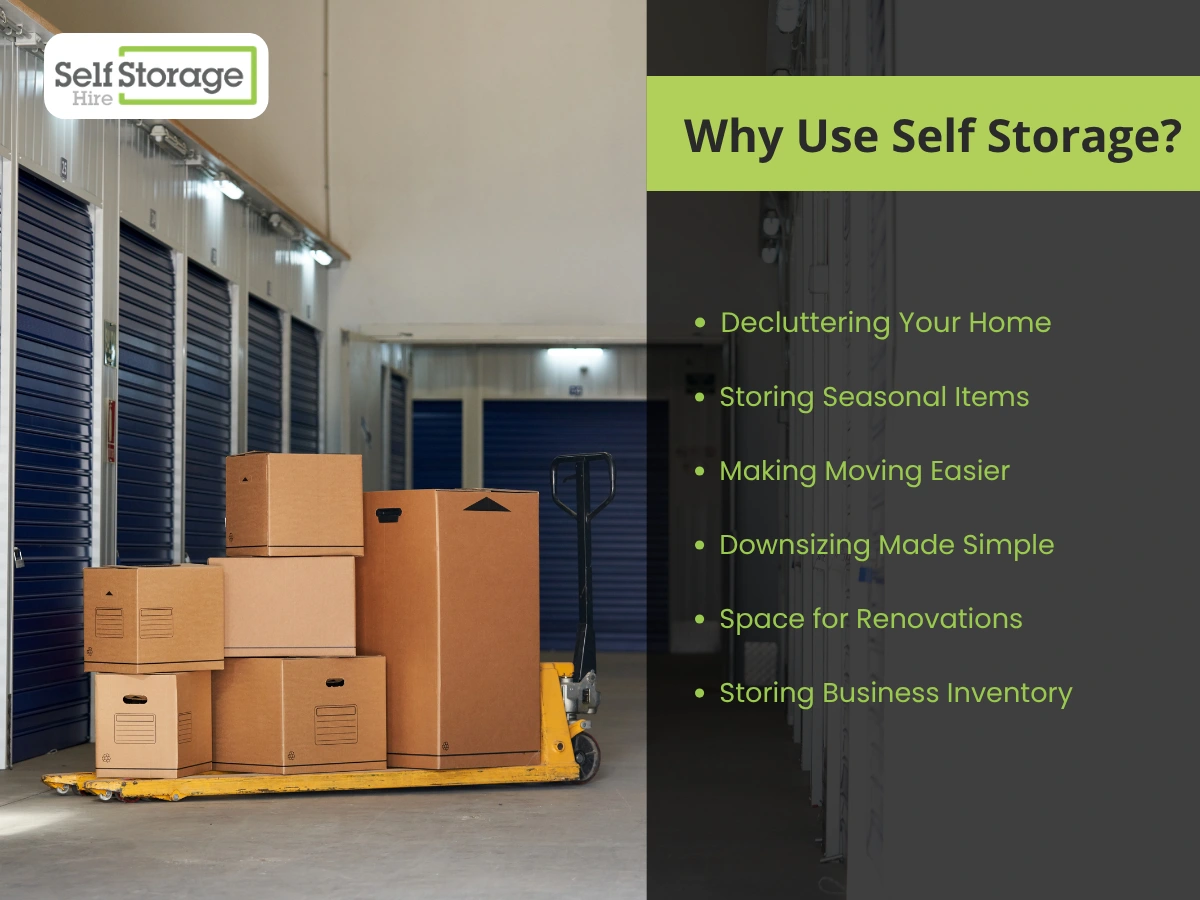
6 reasons to use Self Storage are:
- Declutter Your Home: Store unused items to free up space and keep your home organised.
- Store Seasonal Items: Keep seasonal items safe and out of the way to reduce clutter.
- Simplify Moving: Use storage to keep belongings secure and reduce stress during moves.
- Make Downsizing Easier: Store extra items as you adjust to a smaller space.
- Create Space for Renovations: Move furniture into storage to protect items and clear work areas.
- Store Business Inventory: Keep excess stock and supplies in storage to maintain an efficient workspace.
Declutter Your Home
Self-storage units help declutter your home by providing a secure space for seasonal and rarely used items such as furniture, keepsakes, and old clothes. Moving these items out of your living areas frees up rooms, closets, and storage areas, making your home more open, functional, and easier to clean, organise, and maintain while reducing daily clutter and stress.
It keeps valuable and sentimental belongings protected from dust, moisture, and pests while remaining accessible when needed. With proper labelling and organised packing, you can quickly locate items, rotate seasonal use, and manage what to keep, donate, or sell without disrupting your living space.
Store Seasonal Items
A storage unit keeps seasonal belongings safe and accessible when not in use, freeing up valuable space at home. Items like Christmas trees, ski equipment, or summer sports gear can be stored off-site, preventing clutter and protecting them from damage caused by improper storage.
By temporarily storing decorations or sports equipment, you can rotate them with ease, ensuring your home stays organised throughout the year. This approach makes managing and storing seasonal items simpler and more efficient. Climate-controlled units further protect delicate items, such as upholstered furniture or wooden gear, from humidity and temperature changes.
Simplify Moving
During relocation, a self-storage unit provides a secure, flexible space to store your belongings, helping you manage timing gaps, reduce clutter, and stay organised throughout the move. Furniture, boxes, and other items can be safely stored while you move, renovate, or stage your home for sale, freeing up space and making the process more manageable.
It reduces clutter, streamlines the moving process, and keeps your belongings secure until you are ready to move them into your new space. You can store large furniture or extra boxes while you pack or prepare your home, protecting your possessions from damage.
Make Downsizing Easier
By providing secure, flexible space for extra belongings, self-storage makes downsizing easier as you move into a smaller home without overcrowding or rushing decisions. It allows you to store furniture, keepsakes, and boxes safely while you sort what to keep, sell, or donate at your own pace, reducing stress during the transition.
Organised storage keeps items protected from dust, moisture, and damage while remaining easy to access when needed. Using labelled boxes, planning your new layout, and choosing climate-controlled units for items like wood or leather helps ensure a smoother, more efficient downsizing process with better control and peace of mind.
Create Space for Renovations
Self-storage provides extra space during home renovations by securely holding furniture, appliances, and personal belongings out of the way. Moving items like sofas, tables, cabinets, and mattresses into a storage unit protects them from dust, paint, scratches, and other construction-related damage while rooms are updated or kitchens and bathrooms are remodelled.
It also improves safety and efficiency by providing contractors with clear work areas and reducing the risk of accidents. Organised storage ensures easy access to your items, while climate-controlled units protect sensitive belongings, helping your renovation stay on schedule and stress-free.
Store Business Inventory
When business space becomes limited, storing inventory in self-storage helps free up workspace and manage excess stock, documents, and supplies more efficiently. It allows you to securely store bulk products, seasonal stock, packaging materials, equipment, and archived files, keeping your office or home workspace organised and focused on daily operations.
Using storage units protects your assets from dust, moisture, and damage while improving inventory control and reducing clutter. It also makes it easier to track stock levels, access items when needed, and scale your storage as your business grows, all while maintaining a clean and productive workspace.
Is Self Storage Safe?
Yes, self-storage is generally safe because modern facilities employ multiple security measures, including controlled access, 24/7 surveillance, unit alarms, and fire detection systems, to protect your belongings. These systems work together to track access, monitor activity in real time, and respond quickly to risks, while well-lit, well-maintained spaces add another layer of protection. To reduce remaining risks such as theft, environmental damage, pests, or improper packing, choose a secure storage facility, use proper packing methods, and consider insurance coverage.
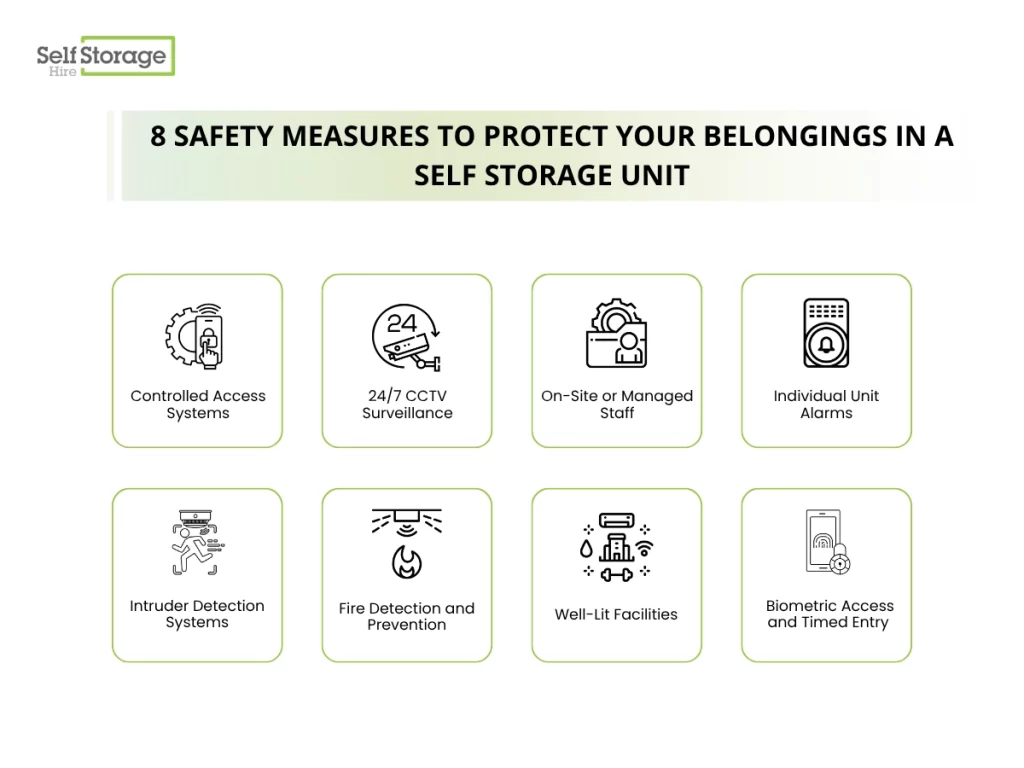
8 Safety Measures to Protect Your Belongings in a Self Storage Unit
- Controlled Access Systems:
Self-storage facilities limit entry to authorised users through keypads, keycards, mobile apps, or fobs. Digital logs and License Plate Recognition (LPR) track every visit, helping staff identify unusual activity and prevent unauthorised access, forming the first line of defence for your belongings.
- 24/7 CCTV Surveillance:
Modern self-storage facilities are equipped with high-definition cameras, night vision, and motion alerts throughout all entry points, corridors, and shared areas. Continuous monitoring deters theft, ensures prompt responses to incidents, and allows customers to remotely verify the facility’s security, providing peace of mind.
- On-Site or Managed Staff:
Trained personnel patrol the storage facility, monitor surveillance feeds, and respond immediately to alarms. Their presence adds a human decision-making layer that supports automated systems, helping manage emergencies, investigate suspicious activity, and assist customers quickly when needed.
- Individual Unit Alarms:
Many self-storage units feature advanced motion and door sensors that trigger instant alerts when tampered with. Real-time notifications allow staff to respond swiftly, preventing break-ins or mishandling, while also deterring intruders and giving customers confidence that their belongings are continuously protected.
- Intruder Detection Systems:
Perimeter and internal sensors in storage facilities detect unusual movements around units, even when standard entry points remain secure. Advanced facilities often integrate AI-enabled cameras and automated alerts, improving detection speed and response coordination to prevent potential security breaches.
- Fire Detection and Prevention:
Self-storage facilities install smoke and heat detectors, wireless alarms, sprinklers, and fire-rated compartments to safeguard stored items from fire hazards. When combined with staff training and clear emergency protocols, these systems reduce risk, limit damage, and enable rapid response in critical situations.
- Well-Lit Facilities:
LED and motion-sensor lighting enhances visibility across self-storage unit corridors, driveways, and entrances. Well-lit spaces improve safety for customers and staff, enhance camera coverage, and deter unauthorised activity, especially during early-morning or late-night visits.
- Biometric Access and Timed Entry
Fingerprint, facial, or iris recognition systems verify identities for secure access to self-storage, while timed entry limits when customers can enter. These measures maintain strict access control, reduce opportunities for unauthorised entry, and provide an added layer of accountability and monitoring.
What Are Common Mistakes to Avoid When Using Self Storage?
The most common mistakes in self-storage involve overpacking, skipping protective measures, improper disassembly, and neglecting insurance. These errors can damage your furniture, make items hard to access, or leave your belongings unprotected. Understanding these common self-storage mistakes helps you store efficiently and safely.
5 Common Self-Storage Mistakes to Avoid are:
- Overpacking the Unit
Piling too many items into a storage unit can crush furniture, cause scratches, and make it difficult to access boxes or pieces later. Leave 12–18 inches of space between large items to allow for air circulation and safe retrieval. Proper stacking prevents pressure on delicate surfaces and reduces the chance of damage to wooden joints, glass, or upholstery.
- Neglecting to Protect Furniture
Furniture that is not wrapped in blankets, covers, or padding is exposed to dust, moisture, and scratches. Protecting delicate surfaces such as wood, leather, or glass helps preserve their condition during long-term storage, ensuring items remain functional and retain their value.
- Storing Furniture Without Insurance
Even in a secure facility, accidents, natural events, or theft can occur, and if your self-storage unit is not insured, you would be responsible for any loss or damage resulting from such events. Insurance ensures that any damage or loss is covered, reducing financial risk and giving peace of mind, especially for high-value furniture or antiques.
- Improper Disassembly
Large items like couches, beds, and tables should be carefully disassembled to maximise storage space and prevent damage. Remove legs, cushions, or detachable parts, and store screws and small components in labelled bags. This not only protects joints and surfaces but also makes it easier to efficiently stack and organise items within the unit.
- Using Plastic Wrap Incorrectly
Large items like couches, beds, and tables should be carefully disassembled to maximise space and prevent structural damage. Remove legs, cushions, or detachable parts, and store screws or hardware in labelled bags. Disassembly also makes items easier to stack and protects delicate joints, ensuring furniture remains intact when retrieved.
How Much Does It Cost to Store Furniture in a Storage Unit?
The cost of storing furniture in a self-storage unit ranges from £40 to £500 per month, depending on unit size, location, and features. Smaller units (25–50 sq ft) cost £45–£120 per month, medium units (50–100 sq ft) cost £110–£390 per month, and larger units (100–200 sq ft) cost £210–£500 per month. Climate-controlled units, which protect items from humidity and temperature changes, usually cost 20–30% more than standard units.
Several factors influence self-storage costs, including unit size, facility location, rental duration, and additional features such as climate control and enhanced security. Understanding these self-storage costs helps you select the right unit for your needs, avoid overpaying for unused space, and protect furniture from dust, moisture, and temperature damage, making storage both secure and cost-effective.
How to Choose the Best Storage Unit for Your Furniture?
Choosing the best storage unit for your furniture includes assessing the right size, climate protection, and accessibility to keep your items safe and in top condition. It also involves evaluating features like secure access, surveillance, and gated facilities for added peace of mind, while proper shelving and amenities make loading, unloading, and organising belongings easier and safer.
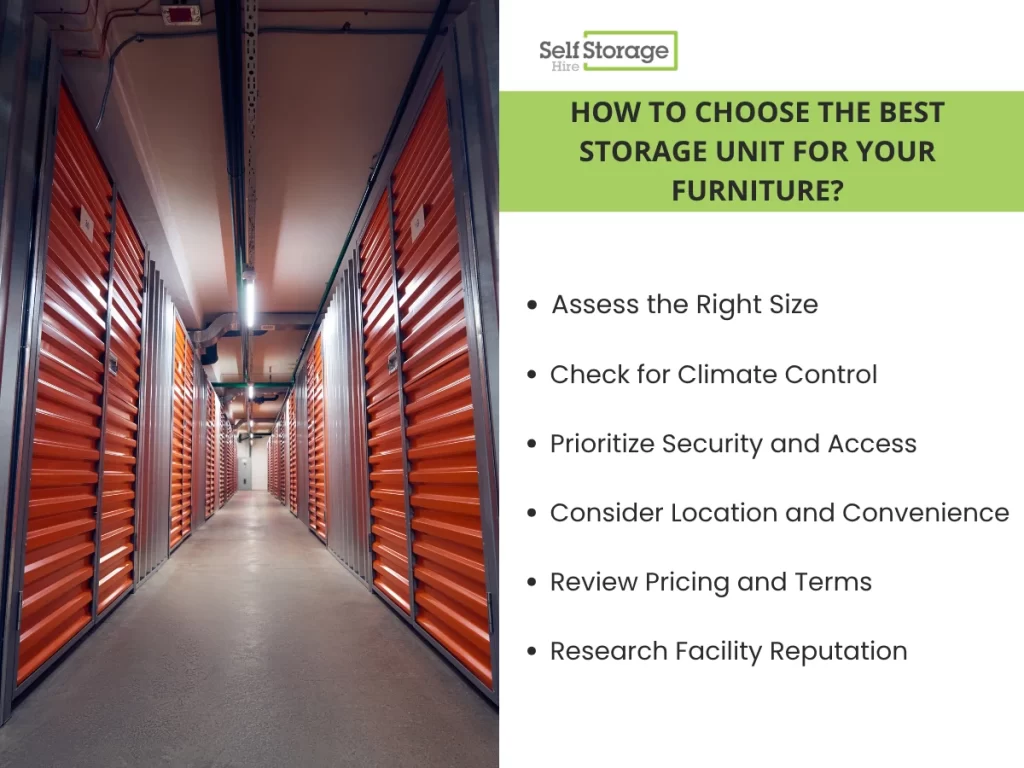
6 Steps to choose the right self-storage unit are:
- Assess the Right Size:
Begin by evaluating the storage unit’s size to ensure it can comfortably accommodate all your furniture and belongings. Measure large items such as sofas, beds, tables, wardrobes, and cabinets to determine the space they will occupy. Choosing the correct unit size prevents overcrowding, reduces the risk of scratches or damage, and allows easy access to items stored at the back, creating a practical and cost-effective solution.
- Check for Climate Control:
Opt for climate-controlled storage if your furniture is sensitive to temperature or humidity changes. This protects items like wood, leather, and antiques from warping, cracking, or mildew. Climate-controlled units help maintain the quality and longevity of your furniture, especially during long-term storage.
- Prioritise Security and Access:
Select a storage facility with gated entry, 24/7 CCTV surveillance, strong lighting, and on-site staff for maximum protection. Drive-up or ground-level units make moving heavy furniture safer and more convenient. Ensuring both security and easy access allows you to store valuable items confidently while handling them efficiently when needed.
- Consider Location and Convenience:
Choose a storage facility close to your home or workplace to save travel time and simplify retrieval. Convenient locations make it easier to move furniture in and out and allow for quick access to stored items whenever necessary. Proximity can also reduce moving costs and the effort required for packing or unpacking.
- Review Pricing and Terms:
Compare self-storage options based on unit size, features, and additional charges such as insurance, deposits, or service fees. Ensure the rental terms allow flexibility for both short- and long-term storage. Understanding pricing and terms helps you select a unit that meets your needs without overspending.
- Research Facility Reputation:
Check reviews, ratings, and testimonials to confirm the self-storage facility’s reliability and quality of service. A reputable storage provider offers peace of mind, professional handling of your furniture, and consistent support if issues arise. This step ensures your belongings remain safe and well-managed.